

What is Social Media Analytics?

We live in the Digital Age where everyone—yes, even our grandparents—is on social media. It is rare to come across someone who does not have at least one account, whether on Facebook, Instagram, or even Quora.
Over in Malaysia, the numbers tell the same story: according to DataReportal’s Digital 2026 report, 30.7 million Malaysians are active social media users, which is equivalent to 85% of the total population and makes us one of the highest penetration rates in Southeast Asia. With such a large audience, businesses can access more customer data than ever. However, only those who understand this data can gain a competitive edge. This is where social media analytics comes in.
This article covers what social media analytics is, how the underlying tools work, which platforms require different approaches, and why this skill has become essential for professionals and organisations in Malaysia’s digital economy.
Understanding Social Media Analytics: Definition, Purpose, and Core Concepts
What is social media analytics?
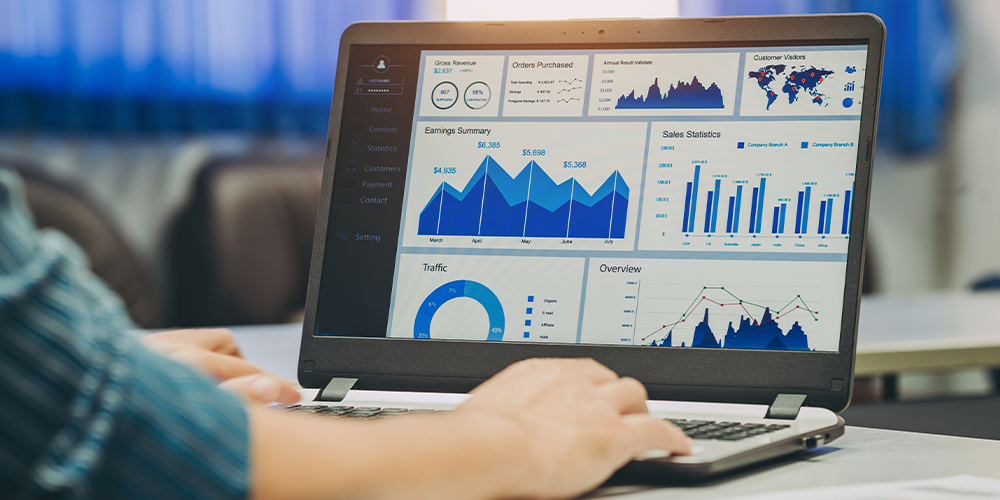
Social media analytics is the collection, measurement, and interpretation of data from social media platforms to inform business decisions. It goes well beyond counting likes or shares and encompasses the tracking of how audiences behave, what content resonates, how a brand is perceived, and how social media activity connects to broader business outcomes such as sales, customer satisfaction, or brand awareness. It is a discipline that helps companies understand their customers better: identifying their age groups, locations, preferences, and choices to achieve their business goals.
Core components: Metrics, KPIs, and measurement frameworks
Social media analytics is built around measurable data points. The most commonly tracked metrics fall into five categories:
- Reach and impressions: How widely your content was distributed and how often it appeared.
- Engagement rate: The proportion of your audience that interacted with a piece of content.
- Sentiment analysis: Natural language processing that classifies mentions, comments, and reviews as positive, neutral, or negative, giving organisations an idea of brand perception in real time.
- Audience demographics: The age, gender, location, language, and interest profile of the people engaging with your content.
- Conversion metrics: Downstream outcomes such as link clicks, form submissions, or purchases that can be linked back to social media activity.
KPIs are selected from these metrics based on organisational goals. A brand awareness campaign tracks reach and impressions; a product launch tracks conversion metrics; a brand reputation initiative prioritises sentiment analysis.
Purpose: From monitoring brand reputation to identifying market opportunities
Effective social media analytics allows organisations to determine the most effective type and format of content for their audience, identify the best day and time to reach them, and conduct competitive analysis by tracking what works for others in their space. When combined with CRM data, it also allows businesses to adjust how they manage customer relationships based on what the data reveals about unmet needs and expectations.
How Social Media Analytics Tools Work: Data Collection and Interpretation
How analytics tools gather and aggregate data
Social media platforms expose data through application programming interfaces (APIs). Analytics tools—both native (built into the platform) and third-party—query these APIs on a scheduled basis to pull post-level metrics, audience data, and engagement figures into a centralised dashboard. Social listening tools go a step further, passively monitoring the broader internet for brand mentions, hashtag usage, and relevant conversations regardless of whether the brand was directly tagged.
Interpretation: Transforming raw data into actionable insights
Raw metrics only become useful when contextualised against a benchmark, a competitor, or a campaign goal. A post that receives 500 impressions means something very different for an account with 1,000 followers versus one with 100,000. Analytics interpretation involves setting baselines, identifying trends over time, running competitive benchmarks, and applying sentiment analysis to understand audience response.
For Malaysian businesses, one practical example would be a local F&B brand running a Ramadan campaign. It can use sentiment analysis to track whether audience reactions are trending positive or negative in real time, and adjust messaging before the campaign ends rather than waiting for post-campaign reporting.
Types of Social Media Analytics Across Different Platforms
Platform-specific analytics: Facebook, Instagram, LinkedIn, TikTok, and X
Different platforms serve different data and different business purposes. The table below summarises each platform’s native analytics tool, what it measures best, and its primary professional use case:
|
Platform |
Native analytics tool |
Measures best |
Primary use case |
|
|
Meta Business Suite | Reach, paid vs organic performance, audience demographics |
Brand awareness, community management, paid campaign tracking |
|
Instagram Insights |
Story performance, Reels reach, follower growth, saves |
Product discovery, influencer benchmarking, visual content performance |
|
| LinkedIn Analytics | Follower seniority, industry breakdown, post impressions |
B2B marketing, employer brand tracking, thought leadership measurement |
|
| Tiktok | TikTok Business Analytics | Video watch time, traffic sources, follower activity times |
Organic reach, content virality, younger audience engagement |
| X (Twitter) | X Analytics | Impressions, link clicks, profile visits, tweet engagement rate |
Real-time brand monitoring, crisis management, public sentiment tracking |
Comparing native vs third-party analytics tools
| Native tools (e.g. Meta Insights, LinkedIn Analytics) |
Third-party tools (e.g. Hootsuite, Sprout Social, Brandwatch) |
|
|
Cost |
Free, included with platform account |
Subscription-based; ranges from affordable to enterprise pricing |
|
Data scope |
Single platform only |
Cross-platform aggregation in one dashboard |
|
Competitive data |
Limited or unavailable |
Competitor benchmarking available |
|
Sentiment analysis |
Basic or absent |
Advanced NLP-based sentiment analysis |
| Best for | Small businesses and single-platform management |
Marketing teams, agencies, and multi-channel campaigns |
Customising analytics approaches for different departmental goals
Social media analytics is not exclusively a marketing function. Marketing teams use it for campaign performance measurement and audience segmentation. On the other hand, human resources teams use LinkedIn Analytics to benchmark employer brand perception and track the reach of talent acquisition content. As for sales teams, they may use social listening to identify purchase intent signals and monitor competitor activity.

How Does Data Ethics Fit Into the Equation?
In a world where content is shared instantaneously, social media analytics helps businesses understand individual customer behaviour as well as group or demographic behaviour. Incorporating data ethics into this is of utmost importance, as customers need to know their data is protected at all times.
Data protection and ethics are inseparable. By using proper data ethics protocols, businesses can ensure they do not violate any laws or regulations, and keep their reputation intact.
In Malaysia, this is governed by the Personal Data Protection Act (PDPA), which was significantly strengthened through the PDPA Amendment Act 2024. Key provisions that came into effect in phases from January to June 2025 include mandatory appointment of a Data Protection Officer for organisations that process large volumes of personal data, compulsory data breach notifications, and new data portability rights for individuals. For businesses using social media analytics to collect, store, and process user data, these obligations apply directly.
If you are looking at postgraduate pathways into social media analytics, a comprehensive curriculum should include data ethics. Data ethics is a key part of Sunway University’s Master in Data Science programme. Students can take Data Science Ethics as an elective, which covers the ethical and privacy implications of big data collection, including how to navigate challenges such as unfair discrimination, human bias in data models, and transparency in algorithmic decision-making. The outcome is that practitioners will have the grounding to handle customer data responsibly and in compliance with applicable regulations.
The Importance of Social Media Analytics for Career and Organisational Growth
Enhancing team performance and departmental outcomes
For mid-career professionals, proficiency in social media analytics translates directly into better team outcomes. Managers who can read analytics data confidently make faster, more defensible content decisions, whether it’s knowing which format drives highest engagement for their audience, which posting cadence sustains growth, or how to measure the actual ROI of a campaign against organic alternatives.
Gaining a competitive edge in Malaysia’s evolving digital landscape
Malaysia’s digital economy is accelerating. With 85% of the population active on social media and the government’s NIMP 2030 placing digital skills at the centre of national economic strategy, organisations that can extract insight from social data faster than their competitors have the upper hand. Professionals who combine domain expertise with social media analytics capability are increasingly sought after in marketing, communications, product, and strategy functions across Malaysian organisations.
Empowering Future Data Leaders
Social media analytics is no longer a specialist skill reserved for digital marketing teams. Rather , it is a vital professional skill for anyone working in a business-facing role in Malaysia’s digital economy. The ability to collect, interpret, and act on social data is what separates organisations that react to their audiences from those that anticipate them.
Sunway University 100% online Master in Data Science is designed to equip students with the skills and knowledge to navigate the complexities of a data-driven world. The programme includes a Social and Digital Media Analytics elective that teaches students to turn raw social and digital data into actionable insights. It covers social listening, influencer analysis, and both qualitative and quantitative techniques for understanding user behaviour, content performance, and share of voice across platforms.
To find out more about how this programme can help you build a successful career in data science, schedule a chat with our Education Counsellors today.